
The Chapters of MoSD
3 initial Chapters, each covering different Traits and Skills
A brief summary
Each Chapter of Masters of Social Dancing follows the same MoSD system and:
- have between 10-12 hours over the course of 2-3 days (occasionally 4);
- can be taken in any order;
- there is no progression in difficulty from Chapter to Chapter in terms of content complexity;
Every Chapter is designed to offer a similar level of depth, challenge, and discovery within the MoSD experience.
What changes from one Chapter to another is not how difficult the content is, but which set of Foundations, Traits, Skills, and related Challenges we gonna cover and which Titles you can pursue and earn.
Because of that, each Chapter gives access to a different tier of Titles:
- In Chapter 1, participants can work toward the Explorer Titles.
- In Chapter 2, they can pursue the Experienced Titles.
- In Chapter 3, they can pursue the Expert Titles.
So even if someone taking Chapter 2 has enough Resonance to match the Explorer level, they may still not qualify for those Titles, because the required Challenges for them are held during Chapter 1.
Taking more Chapters gives dancers the opportunity to experience the system more fully. It allows them to see how their dance resonates with more people, observe their growth over time, and expand their success across a wider variety of Challenges. The more Chapters you take, the more complete your picture becomes, both of how your dancing feels today and of what you are capable of building next.
What's normally covered in the 12-hour program, per Chapter.
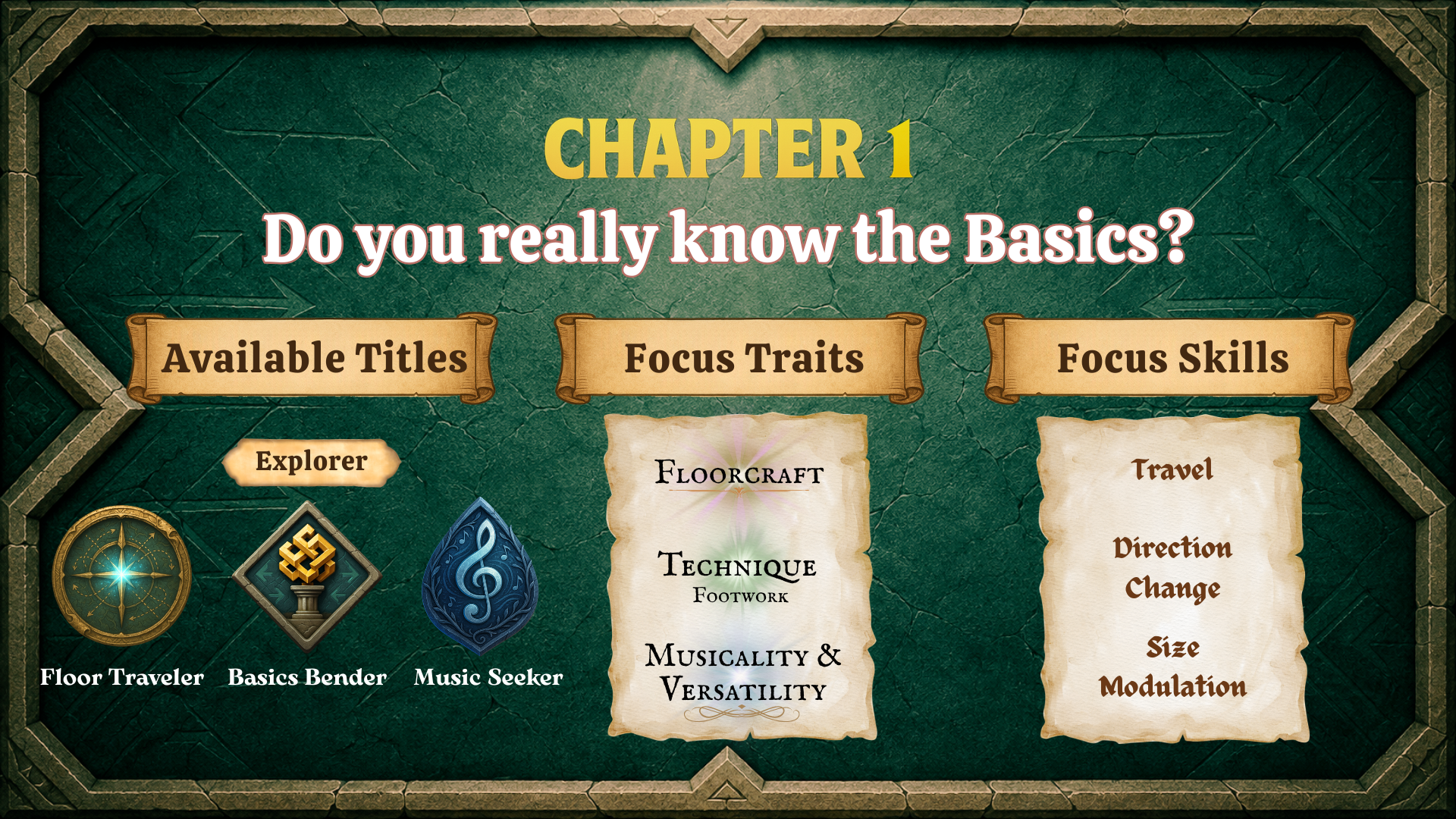
Chapter 1, Do You Really Know the Basics?, is where Gui Prada and the Masters of Social Dancing begins the quest of transforming the “basics” into tools for deeper social dancing.
The goal: develop the Traits of Floorcraft, Technique: Footwork, and Musicality
This Chapter is designed to help dancers understand how and develop ways to travel through space, how clearly and efficiently their steps communicate, and how to modify the steps to convey changes in the music.
Rather than treating basics as something to move past quickly, Chapter 1 breaks them open so dancers can discover how much expression, connection, depth, challenge, and creativity already live inside the foundations of Brazilian Zouk.
Throughout Chapter 1, we work with the Foundations of Posture, Weight Transfers, Pivots, Timing, and Tracks. From there, we build and refine core Movements such as Linear Basic, Lateral, Viradinha, Walk Around, Elástico, and Cuddle, then use Skills like Travel, Direction Change, and Size Modulation to turn those basics into living tools for the dance floor.
When Chapter 1 is offered in a 10 hour format, the focus Traits become Floorcraft and Footwork, with Musicality still present through timing, rhythm, and modulation, but no longer treated as one of the main focus Traits for that edition.
Chapter 1 opens the possibility of earning the Explorer Titles: Floor Traveler, Basics Bender, and Music Seeker.
July 24-26 - SOLD OUT

On September 4-7, the full Chapter's 12-hour program

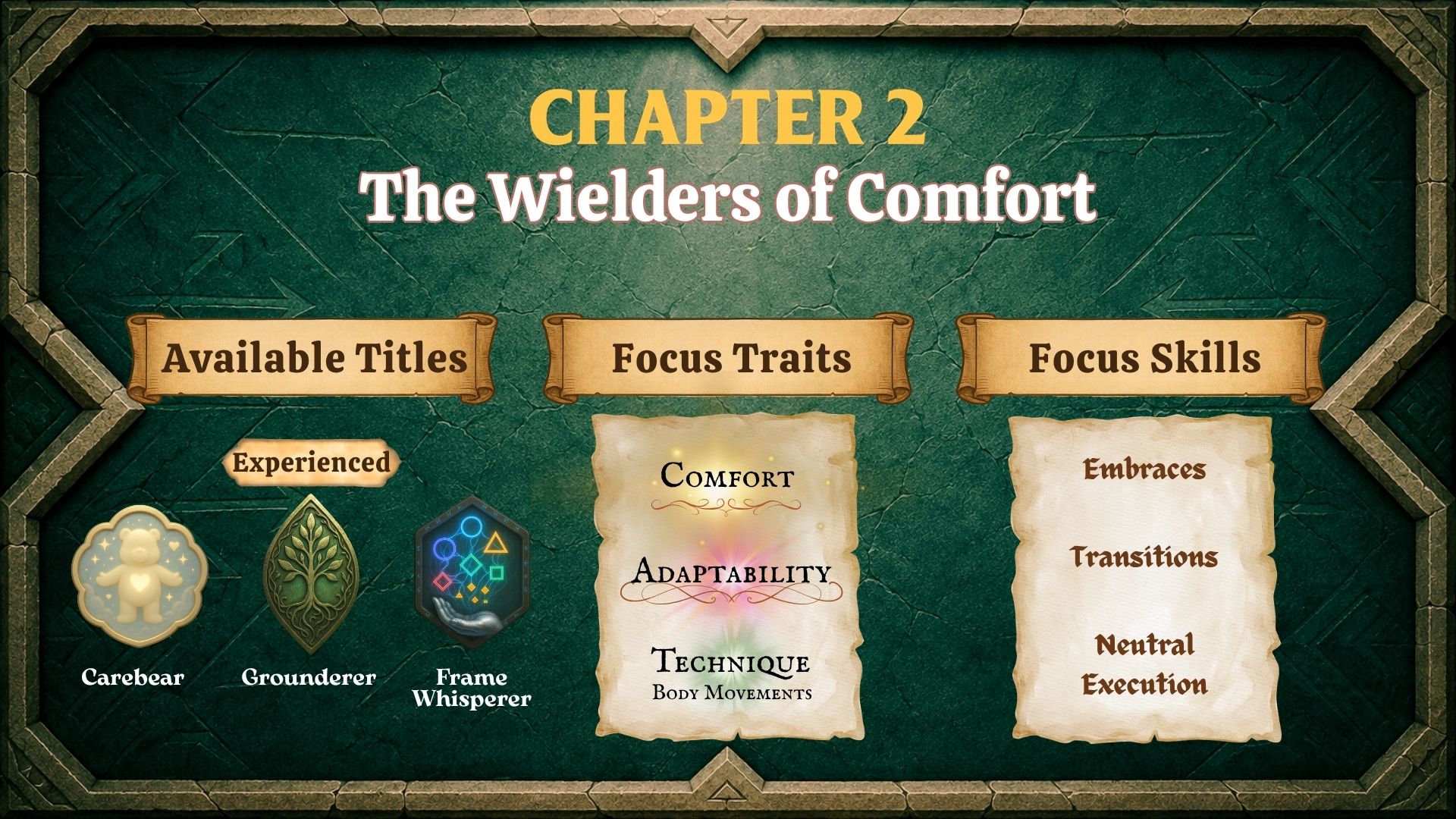
Chapter 2, The Wielders of Comfort, is where Gui Prada and the Masters of Social Dancing turns its attention to one of the deepest goals of social dancing: making the dance feel truly good.
The main focus of this Chapter is the development of the Traits of Comfort and Adaptability, helping dancers create a dance that feels safer, easier, more supportive, and more attuned to the person in front of them. In the full 12-hour format, Chapter 2 also includes Technique: Body Movements, expanding the work into how the body can move with more clarity, control, and responsiveness.
Rather than focusing on adding more and more material, Chapter 2 helps dancers refine what they already do so the dance can feel more fluid, grounded, and connected. Throughout the Chapter, we visit the Foundations of Posture, Weight Transfers, Compression & Leverage, and Tension & Pressure. From them, we develop our basic steps giving special attention is given to Neutral Execution, since mastering the neutral execution of movements is one of the keys to developing both Comfort and Adaptability.
We also focus on the Skills of Embraces and Transitions: the first being directly related to the comfort of the physical connection and the second to the comfort of the flow of the dance.
Chapter 2 opens the possibility of earning the Experienced Titles: Carebear, Grounderer, and Frame Whisperer.
August 28-30, 12-hour program

October 9-11, 10-hour program

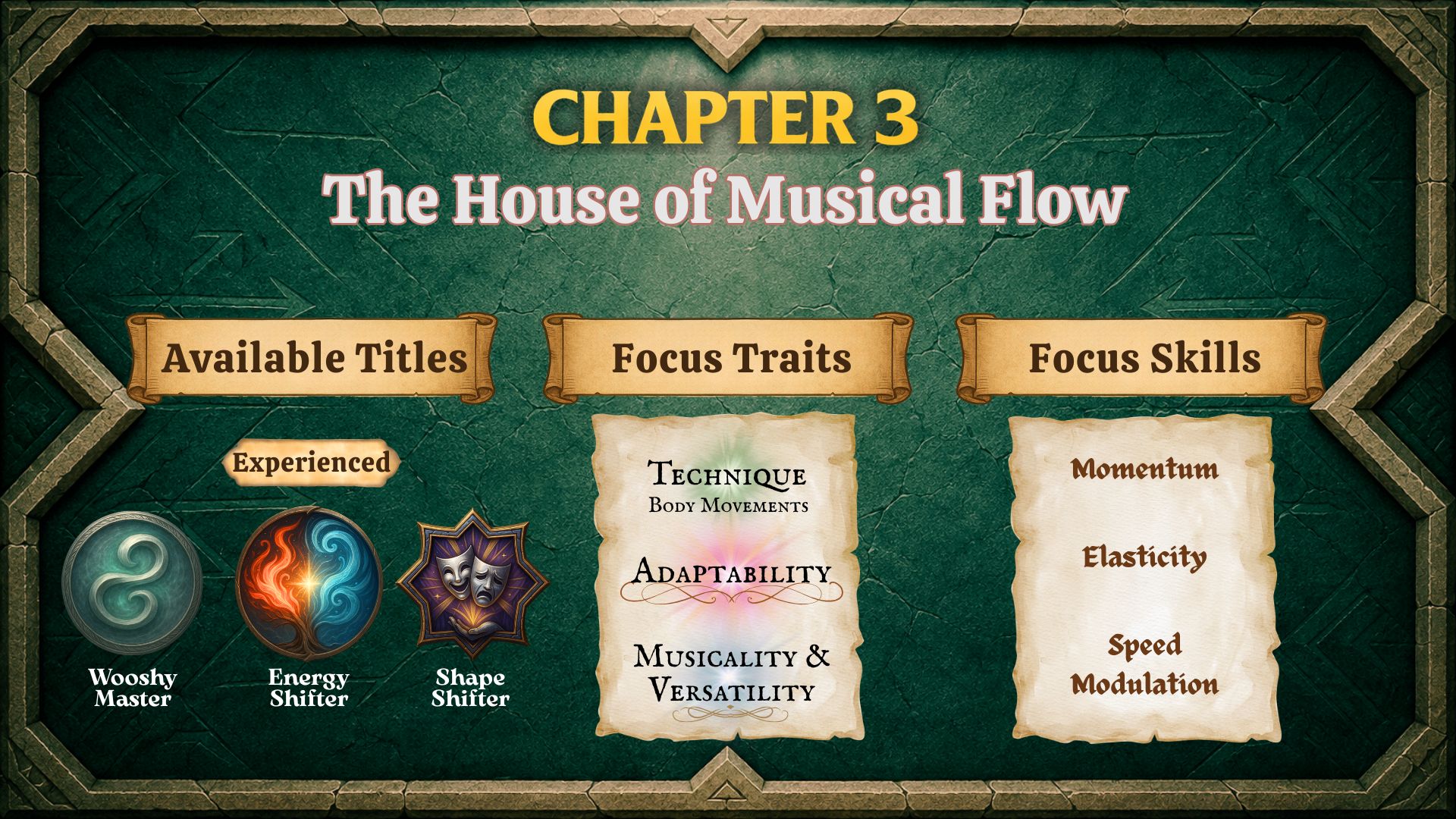
Chapter 3, The House of Musical Flow, is where Gui Prada and the Masters of Social Dancing explores how technique, adaptation, and musical expression come together to create a dance that feels alive, fluid, and deeply responsive. In its 12-hour format, the focus Traits of this Chapter are Technique: Body Movements, Adaptability, and Musicality & Versatility. In the 10-hour format special emphasis is given to Body Movements and Musicality. The goal is to help dancers understand how to move with greater articulation, how to adapt more seamlessly to their partner, and how to shape the dance with richer musical awareness and versatility.
Throughout Chapter 3, we work with the Skills of Momentum and Elasticity, using them as pathways to develop more fluid movement, clearer energy exchange, and a more expressive relationship with the music. The Chapter also includes challenges that can lead dancers toward all 3 Expert Titles and 2 Experienced Titles. These Expert Titles are the hardest to earn in the entire MoSD system, because they require participants to resonate at 7, our highest level of social dancing resonance, meaning the dance was felt as deeply embodied, transformative, and masterful by the people they danced with.
October 23-25, 12-hour program
